



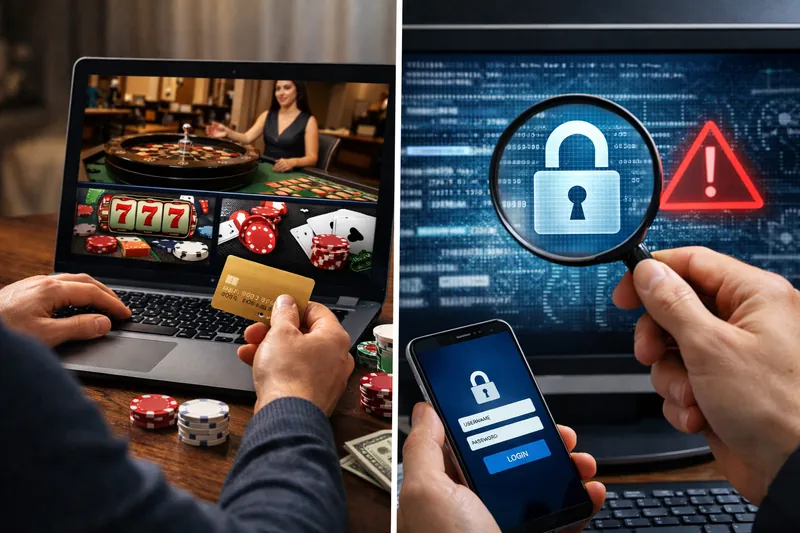

Online casinos can be safe for some players, but only if they choose the right platform and understand the risks clearly. The problem is that many beginners often mistake a polished interface, big bonuses, or aggressive advertising for real trustworthiness. In reality, safety depends on licensing, security systems, deposit and withdrawal procedures, terms of use, and how the operator handles disputes. Just as importantly, players themselves need to know how to protect their accounts, manage their budget, and avoid trusting surface-level signals.
Is online casino safe?
The short answer is: it can be safe, but not every platform is safe. An online casino is a digital transaction environment where users provide personal information, payment data, and make deposits and withdrawals. So this is not only about playing games, but also about data security and financial risk management.
A trustworthy online casino usually has several clear signs: it publicly shows its license, uses encrypted connections, provides transparent terms, has a clear identity verification process, and offers customer support that actually responds. On the other hand, if a platform focuses only on promoting “big wins,” “super-fast withdrawals,” or “huge no-strings bonus offers,” you should be cautious from the start.
In other words, when asking whether an online casino is safe, a better answer is: how safe it is depends on where you play and how you play. Beginners should start by reading platform information carefully instead of looking only at promotions or social media recommendations. If you are still at the general research stage, you can also read cách chơi casino an toàn to understand the basic process before signing up.
I usually look at the safety of an online casino in two layers: the platform layer and the user layer. The platform needs proper licensing, security, and clear payment procedures; the player needs to protect the account, never share OTP codes, avoid depositing based on emotion, and always check the terms before making a transaction.
Risks players should know about
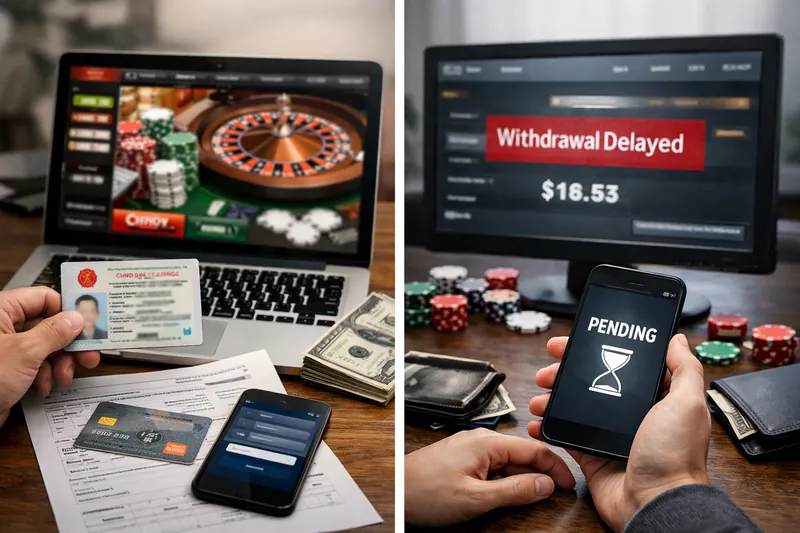
The biggest risk in online casinos is not only losing bets. For beginners, the real danger often comes from choosing a poorly controlled platform or handling an account carelessly. When you understand the risks correctly, it becomes much easier to prevent problems than to deal with the consequences later.
Common risk groups include:
- Personal data risk: uploading ID cards, address details, statements, or payment information to a platform with unclear origins.
- Transaction risk: a deposit succeeds but the balance updates slowly, a withdrawal is held for too long, or extra document requests appear without a clear reason.
- Hidden terms risk: bonuses with high wagering requirements, game restrictions, withdrawal limits, or repeated verification requirements.
- Impersonation and scam risk: fake branded websites, fake support agents, or Telegram/Facebook groups pretending to be customer service.
- Behavioral risk: chasing losses, raising stakes continuously, using living expenses to deposit, or believing in “guaranteed winning” tips.
Many beginners focus only on the question “Can I withdraw money?” while ignoring a more important one: if something goes wrong, does the platform have a transparent resolution process? A safe online casino is not a place that promises nothing will ever go wrong, but a place that has a clear error-handling process, keeps complete transaction records, and provides responsible support.
If you want to go deeper into separating trustworthy platforms from high-risk ones, read more at cách nhận biết nền tảng đáng tin.
| Risk type | Common signs | Impact level |
|---|---|---|
| Personal data | Asked to upload documents through unofficial chat channels, website lacks HTTPS | Can expose sensitive information |
| Financial transactions | Deposits update slowly, withdrawal history is unclear, unusual extra fees appear | Directly affects your balance |
| Bonus terms | Big promotion claims but no clear wagering info, vague withdrawal limits | Can lead to bonus holds or denied withdrawals |
| Fake support | Staff ask for passwords, OTP codes, or transfers outside the system | Risk of losing both account access and money |
| Player behavior | Depositing more to recover losses, ignoring limits, playing while stressed | Raises financial and emotional risk |
How to check security and licensing
This is the most important step if you want to evaluate an online casino before creating an account. Beginners often look at the design or the number of games, but a better review starts with the footer, terms of use, payment page, and the brand’s operating history.
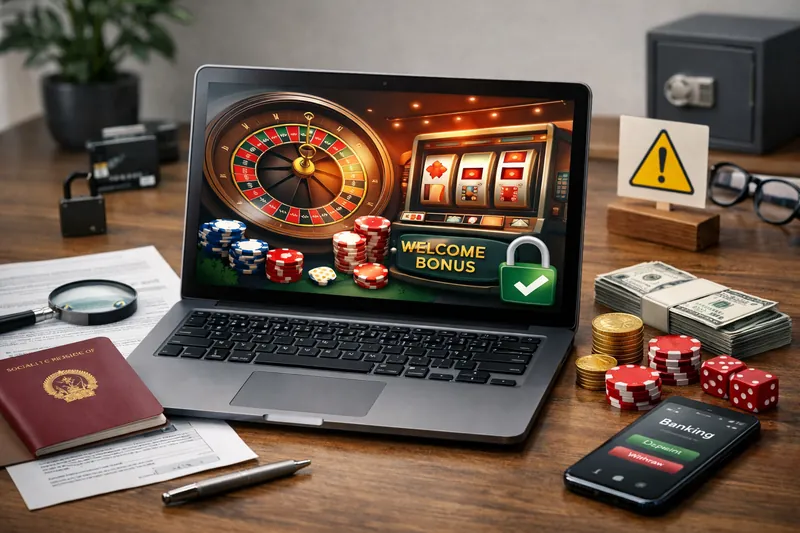
First, check the license. A trustworthy platform usually states the licensing authority, license number, or at least the name of the regulator. If the website only says something generic like “internationally licensed” without verifiable details, that is a bad sign. Also check whether this information is consistent across the footer, about page, and terms and conditions.
Next is technical security. Basic points to review include:
- Whether the site uses HTTPS.
- Whether the login and payment pages are stable and free from strange redirects.
- Whether it supports two-factor authentication or alerts for unusual logins.
- Whether it has a public privacy policy that clearly explains how user data is handled.
You should also check operational transparency. For example, is the withdrawal processing time stated clearly, where does customer support operate, is there an official email or ticket channel, and is the FAQ detailed enough? If all key information is vague, the platform probably has not reached a reasonable level of trustworthiness.
For beginners, the safest approach is to use a fixed checklist before registering. You can refer to tiêu chí chọn casino an toàn for a more systematic review instead of relying on instinct.
Signs of a non-transparent casino
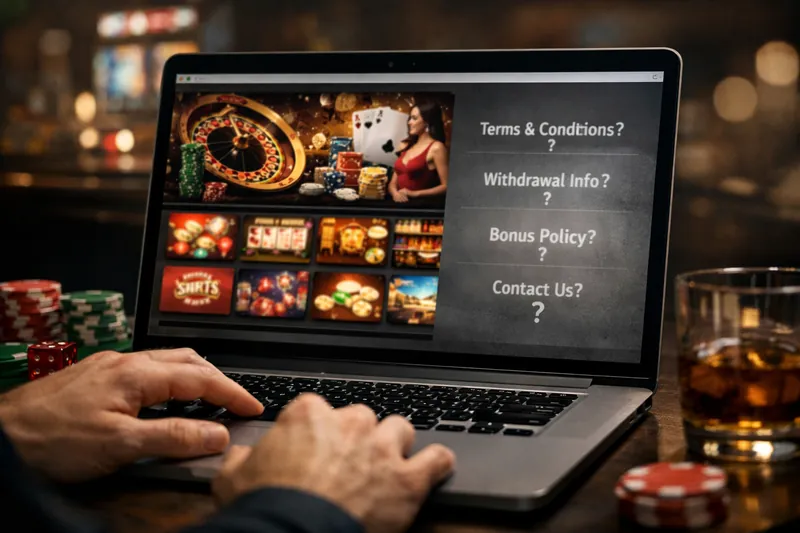
A non-transparent casino rarely admits that it has problems. It usually hides risk behind attractive promotions, vague content, and broad promises. That is why players need to recognize the small warning signs that matter.
First are signs of unclear information. If you cannot find withdrawal terms, bonus policies, verification procedures, or official contact details, that is a major negative signal. A trustworthy platform does not hesitate to publish its rules because it understands that players need them to protect themselves.
The second group is over-the-top marketing. For example:
- Promises of consistent wins or steady income.
- Very large bonuses with no explanation of the attached conditions.
- Claims of withdrawals “within seconds” in every case.
- Pressure to deposit more in order to unlock faster withdrawals.
The third group is unusual support behavior. If customer service contacts you through a personal account, pressures you to deposit, asks you to send documents through private chat apps, or tells you to provide an OTP code, stop interacting immediately. A professional system does not operate in such an uncontrolled way.
Also be cautious if your account gets locked right when you are about to withdraw, or if the system keeps asking for repeated verification without a reasonable explanation. Lack of transparency usually becomes most visible during transactions and disputes, not when you first register.
How to protect your account and deposits
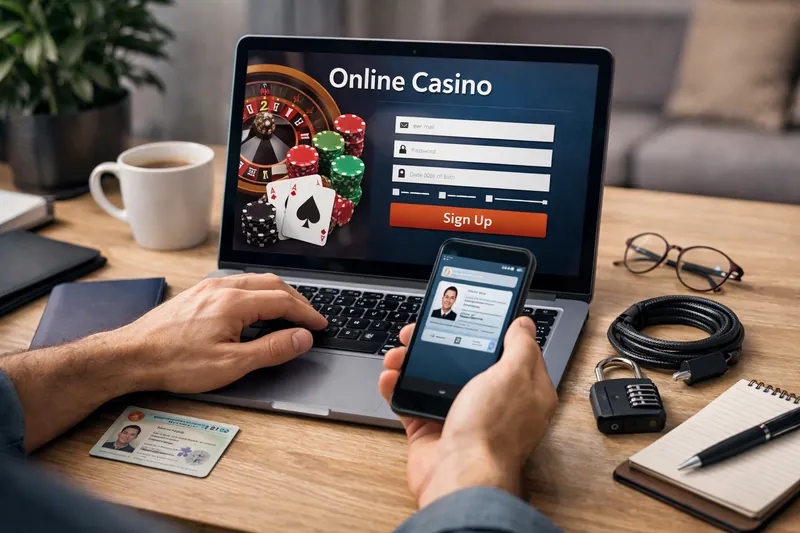
Even if you choose the right platform, you can still create your own security gaps by using weak passwords, storing login information carelessly, or making transactions without checking details. Protecting your account does not require complicated steps, but it does require consistency and the right order.
First, handle the login security side:
- Use a unique password that is not the same as your email or social media accounts.
- Enable 2FA if the system supports it.
- Do not log in on public devices or untrusted Wi‑Fi networks.
- Do not send screenshots showing your balance, login email, or verification codes to anyone else.
Next is protecting deposits and transactions. Deposit only through payment methods displayed officially inside your account. Do not transfer money based on instructions from strangers in chat, even if they claim to be a VIP manager or technical support. Before your first deposit, read the minimum deposit amount, the expected balance update time, and withdrawal conditions so you do not run into avoidable misunderstandings.
One very useful habit is to keep transaction evidence: screenshots of transaction IDs, deposit and withdrawal times, confirmation emails, and support conversations. If an issue happens, this information helps you resolve it faster and reduces emotional arguments.
If you are about to open a new account, you should also read bảo mật khi đăng ký tài khoản. For financial transactions, an toàn khi nạp và rút tiền is useful for understanding how to reduce delays, incorrect details, and verification-related problems.
A very practical tip is to start with a small amount on both your first deposit and your first withdrawal. It does not remove all risk, but it helps you test processing speed, transaction history clarity, and support quality before using larger amounts.
When should you stop playing?

Safety in online casinos is not only about avoiding scams or protecting your account. A very important part is knowing when to stop, because for many players the biggest risk comes from continuing when their mindset is no longer stable. Beginners often underestimate this point.
You should stop playing immediately if one or more of these signs appear:
- You are trying to win back losses in the same session.
- You increase your stake only because you are frustrated or impatient.
- You use living expenses, borrowed money, or savings meant for other purposes.
- You keep playing for too long without noticing how much time has passed.
- You feel irritated, anxious, or out of control when you are not playing.
- You start hiding your deposits or playing time from family members.
Stopping is not failure. In practice, it is a self-protection skill. A clear-headed player always sets time limits, deposit limits, and loss limits before starting. If the platform offers self-limit tools, temporary account blocks, or break reminders, you should use them instead of treating them as an annoyance.
For beginners, the simplest rule is: only play if you treat it as controlled entertainment, not as a way to make money. Once the goal shifts from entertainment to recovering losses or earning income, the risk level rises quickly and every other layer of protection becomes weaker.
Frequently Asked Questions
Below are the most common questions beginners ask when looking into online casino safety. The answers are short, but they focus on practical points that are easy to apply before registering or making a deposit.
Is online casino safe for beginners?
It can be, if you choose the right platform with licensing, solid security, transparent terms, and clear deposit and withdrawal procedures. For beginners, the risk usually comes less from lacking game knowledge and more from trusting exaggerated advertising, registering too quickly, and not reading the rules carefully.
How can I tell whether an online casino has a real license?
Look for licensing information in the footer, terms page, or about page. A transparent platform usually clearly states the licensing authority and related details so users can compare them. If there is only a vague claim with no verifiable specifics, treat that as a sign to be careful.
Is HTTPS enough to conclude that a website is safe?
No. HTTPS only shows that the connection is encrypted at a basic level; it does not prove that the platform is transparent or trustworthy. You still need to check licensing, withdrawal terms, privacy policy, customer support behavior, and how disputes are handled.
Should I deposit a large amount on my first try?
No. On your first try, you should deposit only a small amount to test balance update speed, the payment interface, transaction history, and the system’s support quality. It is a simple but very effective way to reduce operational risk.
What should I do if support asks me to send an OTP code?
Do not send an OTP code under any circumstances. OTP codes are a direct protection layer for your account and transactions. If someone claiming to be support asks for your OTP, password, or an off-platform transfer, stop communicating and change your password immediately.
 Baccarat Online for Beginners - Basic Rules
 How to Play Online Casino Games - An Easy Guide
 How to Choose a Reputable and Safe Online Casino
 How to Register for an Online Casino Quickly and Safely