





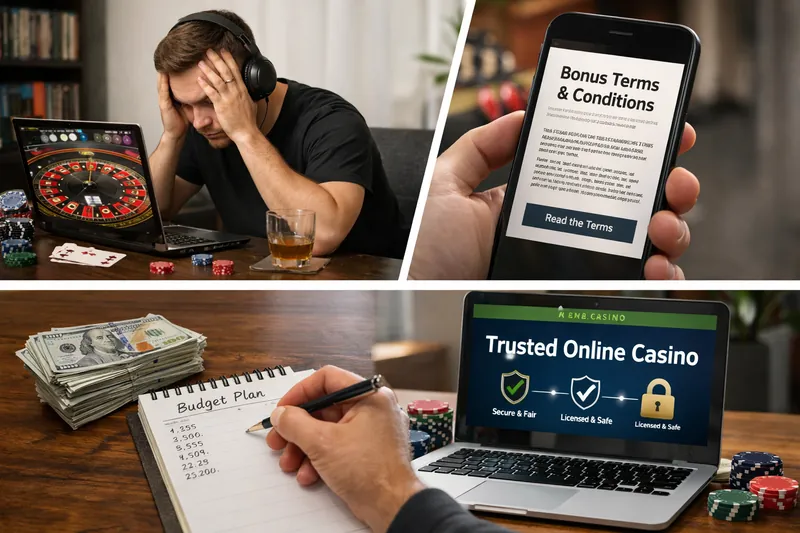

Beginners often do not lose at online casinos because they are “unlucky,” but because they enter with the wrong expectations, too little preparation, and a tendency to react emotionally. A few decisions that seem minor—like depositing too quickly, ignoring bonus terms, or picking a casino based on ads—can quickly turn the experience into a bad one. The good news is that most of these mistakes are avoidable if you understand how online casinos work and set your own limits. If you are looking for tips for beginner casino players, it makes sense to identify the mistakes first before thinking about strategy.
Why do beginners make mistakes so easily?
Beginners often approach online casinos with a mix of curiosity and the hope of winning quickly. That is exactly when flashy design, big promotions, or overly tempting recommendations have the strongest effect. If you do not yet understand how games work, RTP, volatility, bonus rules, or withdrawal procedures, it is easy to assume that picking the right moment is enough to gain an edge. In reality, online casinos reward discipline far more than impulse.
Another common reason is that beginners confuse “knowing the rules” with “knowing how to play safely.” For example, you may know how to place a baccarat bet or spin a slot, but still make serious mistakes if you do not control your deposits, ignore loss limits, or keep jumping between games trying to recover. Inexperience is not just about gameplay mechanics. It is mostly about decision-making.
Beginners also tend to believe unreliable signals such as “this slot is about to hit,” “the last rounds went one way, so the next one must turn,” or “after losing several times, a win is due.” That is a classic thinking error. Every game has its own probability model, and short-term results do not create a promise that the next round will compensate you.
From my experience editing content for beginners, the biggest problem is not a lack of technical knowledge but playing without a personal framework of rules. If you have not decided in advance how much you can deposit, where you stop, and how much loss you can accept, you will almost certainly end up making emotional decisions.
Playing without a clear budget

Many people start with a small amount of money but have no real bankroll plan behind it. They make a first deposit just to try, then add more because “just a little more” feels harmless, and continue increasing the amount when results do not go their way. The problem is not whether the number is large or small. The problem is failing to define in advance how much loss is enough. Without a ceiling, online casino play can shift from entertainment to impulsive behavior very quickly.
Your gambling budget should be completely separate from essential spending. It should not come from living expenses, emergency savings, or money needed for other priorities. A simple rule is to use only money that, if fully lost, would not affect your daily life. Once you set a budget, divide it into smaller sessions instead of pushing everything into one deposit.
A more practical approach is to set three clear markers:
- Daily or weekly budget: the maximum total amount you allow yourself to use.
- Loss limit: once you hit it, you stop and do not deposit more.
- Profit target: if you reach a certain gain, withdraw part of it instead of risking everything again.
| Situation | Undisciplined approach | Smarter approach |
|---|---|---|
| First-ever deposit | Deposit on impulse with no limit | Set a small trial budget and treat it as your spending cap |
| Several losses in a row | Deposit more to recover immediately | Stop exactly at the pre-set loss limit |
| Currently winning | Increase bets sharply because confidence is high | Lock in part of the profit and keep bet size stable |
| Playing several games at once | No tracking of money in and out | Record each session to see which games are draining your budget |
If you are not used to planning ahead, start by writing down a few notes before you play: how much you will deposit, how long you will play, and where you will stop. It sounds simple, but this step helps beginners avoid a large share of the financial mistakes people make with online casinos.
Not reading bonus and withdrawal terms
Bonuses are one of the easiest things to get attracted to because on the surface they look like “extra free money.” In practice, though, bonuses almost always come with usage rules, wagering requirements, game restrictions, expiration periods, and withdrawal conditions. If you focus only on the promotional percentage and ignore the details, you can easily misunderstand the real value of the offer.
A common mistake is depositing first and only later realizing that the bonus requires many times rollover, or that only certain games count toward clearing it. In some cases, players win but still cannot withdraw because they have not finished the wagering requirement, or they run into a maximum cashout rule tied to bonus funds. These situations are not always signs of fraud; often the player simply skipped the terms from the beginning. That is why, before claiming any offer, always read the bonus terms carefully instead of judging the promotion by the headline alone.
When checking the terms, focus on these points:
- Wagering requirement: how many times you must play through the bonus before withdrawing.
- Game contribution: how much each game contributes toward the wagering target.
- Bonus validity: whether it expires too quickly or gives enough time for a beginner.
- Maximum bet limit: betting too aggressively while using a bonus can void it.
- Withdrawal conditions: verification rules, minimum cashout amount, and processing time.
Another mistake is paying attention only to deposits while overlooking the withdrawal side. Beginners often focus on how to fund the account but fail to check what matters more later: whether there are fees, how long withdrawals take, what documents are required, and whether the withdrawal method must match the deposit method. These deposit and withdrawal precautions directly affect the real experience, especially when you want to cash out your first win.
Choosing a casino without proper checks

Many beginners choose an online casino simply because it is heavily advertised, looks polished, or offers a large welcome bonus. This is one of the riskiest mistakes because if the platform is not transparent, every step afterward carries added danger: data security, transaction handling, and disputes during withdrawals. Choosing the wrong casino can do more damage than choosing the wrong playing strategy.
A casino worth considering should show at least a few basic signs of credibility: clear licensing information, transparent payment policies, public terms and conditions, customer support that actually works, and community feedback that is not consistently negative. A beginner does not need to become an investigator, but spending a few minutes checking background and transparency before registering is the minimum.
Things worth checking before opening an account include:
- Whether licensing or legal information is publicly shown.
- Whether the terms, privacy policy, and bonus rules are written clearly and easy to find.
- Whether the payment methods are familiar and practical for users in Vietnam.
- Whether customer support channels are real and active rather than vague generic forms.
- Whether repeated complaints mention frozen accounts, withheld funds, or delayed withdrawals.
If you do not have much experience yet, it is smart to start with independent review criteria or read how to avoid choosing an unreliable casino so you know what to look at. Do not assume that a large casino, strong advertising presence, or social media mentions automatically mean it is trustworthy. What matters is transparency and consistency in policies.
Another warning sign is a platform that pushes hard for fast deposits but stays vague about identity checks or withdrawal procedures. If important information is hidden, written in a confusing way, or changes too often, that is usually a sign to stay away.
Chasing losses and losing control
This is the mistake that can destroy a bankroll the fastest. After a few losing rounds, many people start thinking that increasing the stake slightly will be enough to win everything back. Players often call this “recovering losses,” but in practice it leads to worse and worse decisions. Once the mood shifts from entertainment to frustration, urgency, or anger, your original limits become much easier to break.
Chasing losses usually comes with three warning signs: increasing bets without a plan, playing much longer than intended, and continuing to deposit after already passing your budget. The dangerous part is that the player still feels rational in the moment, while in reality they are reacting to psychological pressure. A short losing streak can turn into a major loss simply because you did not stop on time.
Be especially careful if you notice these signs:
- Thinking, “I have lost enough already, so a win must be coming.”
- Raising your stake only to shorten the time needed to recover losses.
- Switching games repeatedly because you believe another one will save the session.
- Feeling irritated or unsettled but continuing anyway.
- Using money outside your plan just to “recover this one last time.”
If you catch yourself making deals with your own mind like “just one more round,” that is usually the moment to stop immediately. Once your thinking shifts into recovery mode, your ability to judge risk drops fast. Taking a 30-minute break—or ending the day completely—is always safer than trying to rescue a bad session.
The key point is that losses do not create a “right” to win them back. Every next round is still independent within the probability structure of the game. If you want a more sustainable approach, you need to accept that some sessions will end negative instead of turning a small loss into a chain of uncontrolled decisions.
How to play with a clear head and stay responsible

Playing with a clear head does not mean you will definitely win. It means you understand your own limits, understand the risks of the game, and do not let emotions take control. For beginners, the most realistic goal is not maximizing profit but minimizing mistakes. That mindset keeps the experience within a controllable range and lowers the chance of rushed decisions.
A simple but effective routine is this: choose a transparent platform, check the key terms, set your budget, decide how long you will play, and only then start the game. While playing, keep your bet size stable instead of changing it constantly based on short-term results. After the session, review whether you followed your plan rather than looking only at whether you won or lost.
You can apply these principles to play more safely:
- Play for entertainment: do not treat online casinos as a reliable way to make money.
- Set time limits: playing too long clearly reduces decision quality.
- Do not play when tired, upset, or short of money: these are three of the easiest states for losing control.
- Learn the game before increasing bets: beginners should first understand the rhythm of play rather than spend heavily to “learn faster.”
- Stop according to plan: discipline matters more than the feeling that “maybe a little more” could work.
If you are still getting familiar with the basics, you can also read a guide to playing the right way to build a better foundation before trying many games or several promotions at once. Beginners who move more slowly usually pay less “tuition.”
Finally, remember that online casino play should remain a limited form of entertainment. If you find it hard to stop, keep thinking about recovering losses, or notice effects on your work, finances, or everyday mood, it is time to step back and review your habits. Responsible play is not just a slogan; it is the most important layer of protection for a beginner.
Frequently Asked Questions
Below are some of the questions beginners often ask when learning about common online casino mistakes. This section helps you separate inexperience-related errors from the real risks that should be avoided from the beginning.
What is the biggest mistake beginners make at online casinos?
The biggest mistake is usually playing without a clear budget and loss limit. Without that framework from the start, players can easily deposit more, raise bets emotionally, and fall into a cycle of chasing losses. Many other mistakes, such as choosing the wrong casino or missing bonus terms, also begin with the same rushed mindset.
Should I claim a welcome bonus the first time I register?
Not always. A bonus is only useful if you clearly understand the wagering requirement, game restrictions, validity period, and withdrawal rules. If you are new, sometimes depositing and playing with real money without a bonus is easier to control because you are not tied to extra conditions.
How can I tell whether an online casino is trustworthy?
Check the license, payment policies, terms of use, customer support, and real user feedback. A trustworthy casino usually makes important information public, avoids vague terms, and does not create excessive pressure to deposit. If the withdrawal or account verification process is described too vaguely, you should be cautious.
Does losing several times in a row mean a win is coming soon?
No. This is a very common misconception among beginners. Previous results do not guarantee that the next round will make up for them. Thinking that way often leads to increasing bets to recover losses, which is one of the fastest ways to make a losing session much worse.
How should beginners start if they want to avoid mistakes?
Start with the basics: choose a transparent platform, read the key terms carefully, set a small beginner budget, and stop according to plan. Instead of trying to win quickly, focus on understanding the games and building self-control habits. For beginners, this slower approach is usually much safer and more practical.
 Baccarat Online for Beginners - Basic Rules
 How to Play Online Casino Games - An Easy Guide
 How to Choose a Reputable and Safe Online Casino
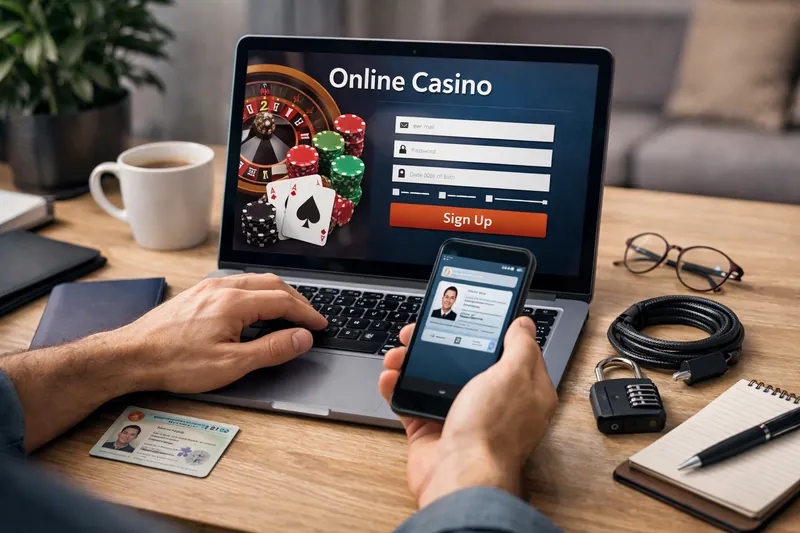 How to Register for an Online Casino Quickly and Safely